
Shoulder Pain: Causes, Conditions & Exercises
Shoulder pain can affect everything from reaching overhead to getting a comfortable night’s sleep.
Whether your symptoms developed gradually or came on suddenly, understanding the cause is the first step toward improving it.
Below you’ll find the most common shoulder conditions I see in clinic, the exercises that help, and when to seek further advice.
Understanding Shoulder Pain – A Practical Guide
Shoulder pain is one of the most common musculoskeletal complaints I see in clinic. It can range from a dull background ache to sharp pain that limits reaching, lifting or sleep. The good news is that the majority of shoulder problems respond well to the right management — and identifying what is driving yours is the most important first step.
This guide covers the most common causes and conditions, why shoulder pain sometimes persists, and what tends to help.
Common Patterns and Causes of Shoulder Pain
Shoulder pain rarely has a single explanation. It usually develops from a combination of how the joint is loaded, how well the surrounding muscles control movement, and the contribution of the neck and upper back. Understanding which pattern fits your symptoms is the starting point for effective treatment.
Common Causes of Shoulder Pain
Shoulder pain has many potential causes, and getting the right diagnosis matters — because the treatment approach varies significantly depending on what's driving the problem. Here are the patterns seen most often in clinic.
Rotator Cuff Problems
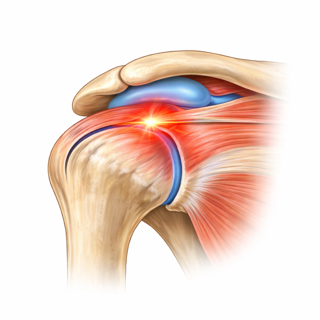
The rotator cuff is a group of four muscles that stabilise and move the shoulder joint. Tendinopathy, partial tears, or impingement of these tendons is one of the leading causes of shoulder pain — particularly aching with overhead activity or lying on the affected side at night.
Frozen Shoulder (Adhesive Capsulitis)
Characterised by a progressive stiffening of the shoulder joint capsule, frozen shoulder typically develops in stages: a painful phase, a freezing phase, and a gradual thaw. Movement becomes significantly restricted — especially rotating the arm outward.
Referred Pain from the Neck
The nerves supplying the shoulder originate in the cervical spine. Irritation or compression at the neck can produce pain, tingling, or weakness that radiates into the shoulder and arm — even when the shoulder itself is structurally normal.
Acromioclavicular (AC) Joint Pain
The AC joint sits at the top of the shoulder where the collarbone meets the shoulder blade. It can become painful from direct impact, repetitive overhead loading, or gradual wear. Pain is usually localised to the top of the shoulder and worsens with reaching across the body.
Common Conditions
-
Frozen Shoulder: Symptoms, Stages & Treatment
Learn about frozen shoulder, common symptoms, when to seek help and practical steps that may support recovery.

-
Shoulder Impingement: Causes, Symptoms & Treatment
Learn about shoulder impingement syndrome, common symptoms, when to seek help and practical steps that may support recovery.
Posture and Neck Involvement
The shoulder does not work in isolation. The neck, upper back and shoulder blade all influence how the shoulder joint moves and loads. Stiffness in the neck or rounding through the upper back can increase strain on the rotator cuff and other shoulder structures — even without direct injury to the shoulder itself.
Repetitive and Overhead Activity
Repeated reaching, overhead work or sustained arm positions — common in desk work, manual trades and certain sports — can gradually load the shoulder beyond what it can tolerate. Tissues become sensitised, particularly when strength or movement control is insufficient to manage the demand.
Rotator Cuff Weakness and Imbalance
The rotator cuff stabilises the shoulder during movement. When these muscles are weak, inhibited by pain or not functioning well — as often happens after injury or reduced activity — other shoulder structures are placed under greater load. Restoring cuff strength is often central to long-term recovery.
Why Isn’t My Shoulder Pain Getting Better?
Persistent shoulder pain usually comes down to one or more ongoing factors: continuing to load the shoulder beyond what it can currently tolerate, insufficient strength or control in the rotator cuff or shoulder blade muscles, or unaddressed stiffness in the neck or upper back. Rest alone rarely resolves shoulder problems — progressive loading, starting at a manageable level, is almost always part of recovery.
Is My Shoulder Pain Serious?
Most shoulder pain does not indicate significant structural damage. Seek prompt advice if you have severe pain following a fall or impact, significant weakness in the arm, inability to lift the arm at all, or pins and needles extending into the hand. These may indicate a more significant injury or a problem referred from the neck.
What Helps with Shoulder Pain?
Effective management typically combines hands-on treatment to reduce pain and restore movement, targeted exercises to strengthen the rotator cuff and shoulder blade muscles, and addressing any contributing stiffness in the neck and upper back. The exercises below provide a starting point — but the right programme depends on which structures are involved and what stage of recovery you are at.
Ready to Get a Proper Assessment?
Understanding what’s driving your pain is the first step. Book a movement assessment and get a clear picture of what’s going on — and what to do about it.
Recommended Exercises
-
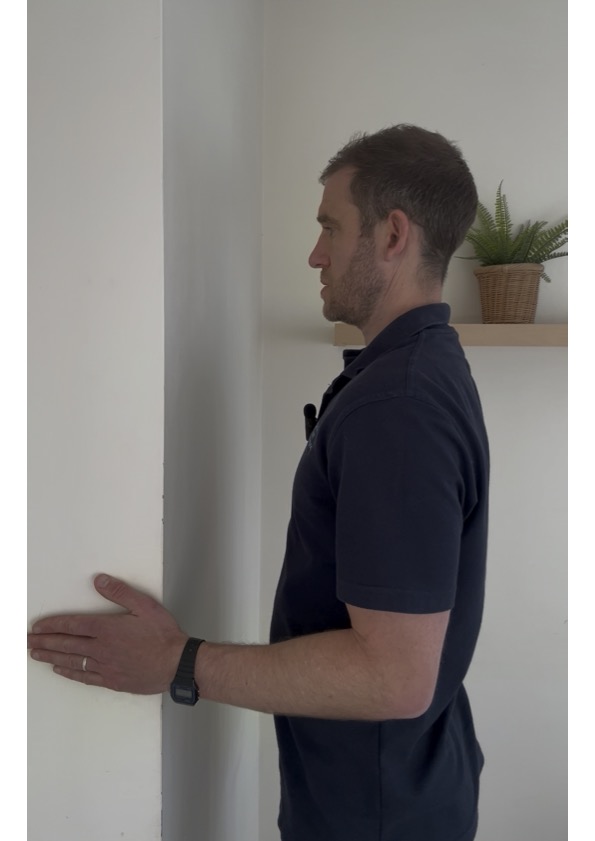
Isometric Shoulder Internal Rotation (Wall Press)
A way to restore control and stability in your shoulder—especially when those sharp pains keep catching you out. Internal Rotation Wall Press — Quick Guide I usually pair this with…
-
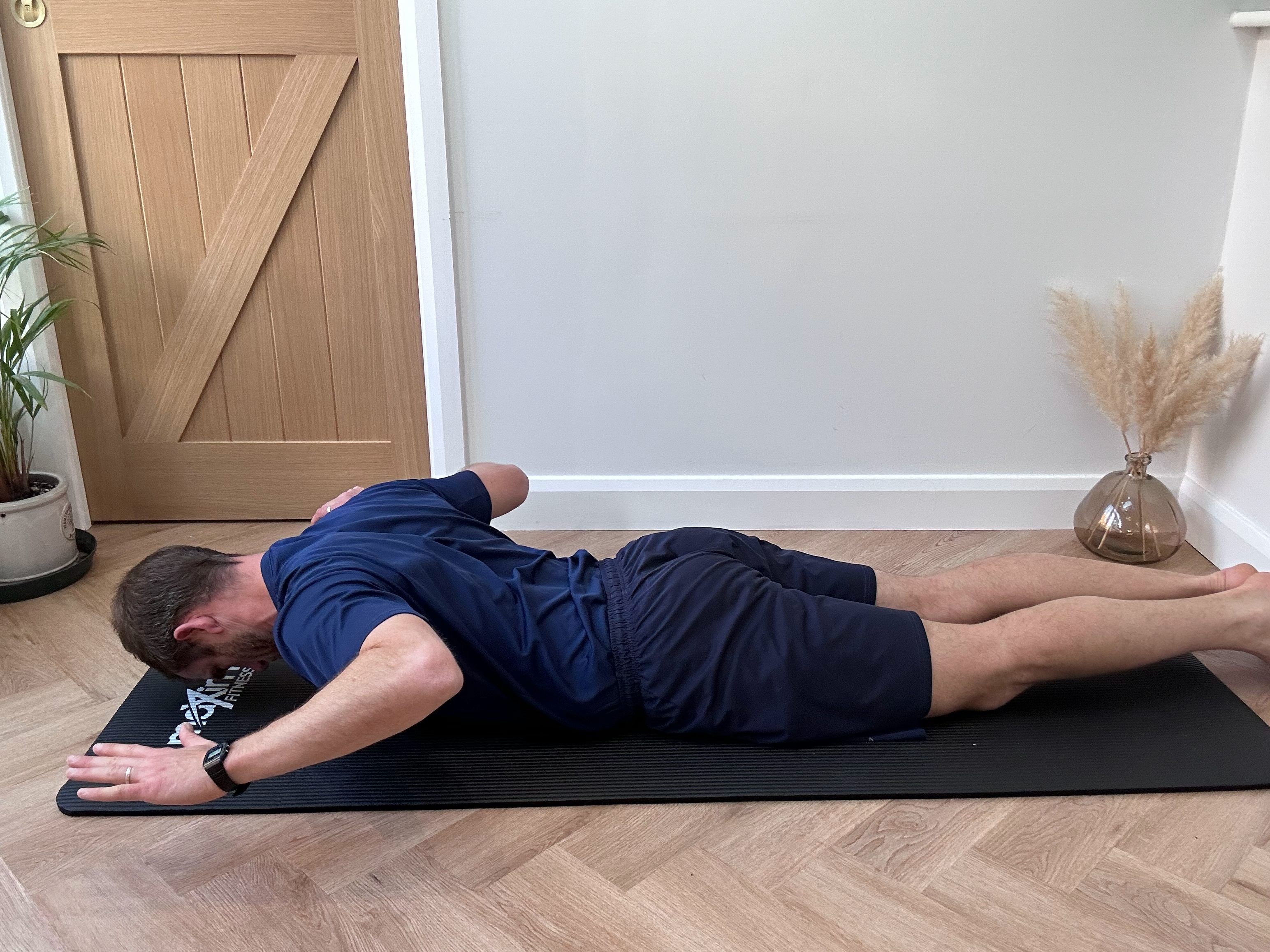
Prone Dorsal Raises: Upper Back Exercise
Do you constantly feel the need to stretch your upper back due to discomfort? Stretching is great, but it won’t address the most common underlying cause—weakness. That’s where this exercise…
-
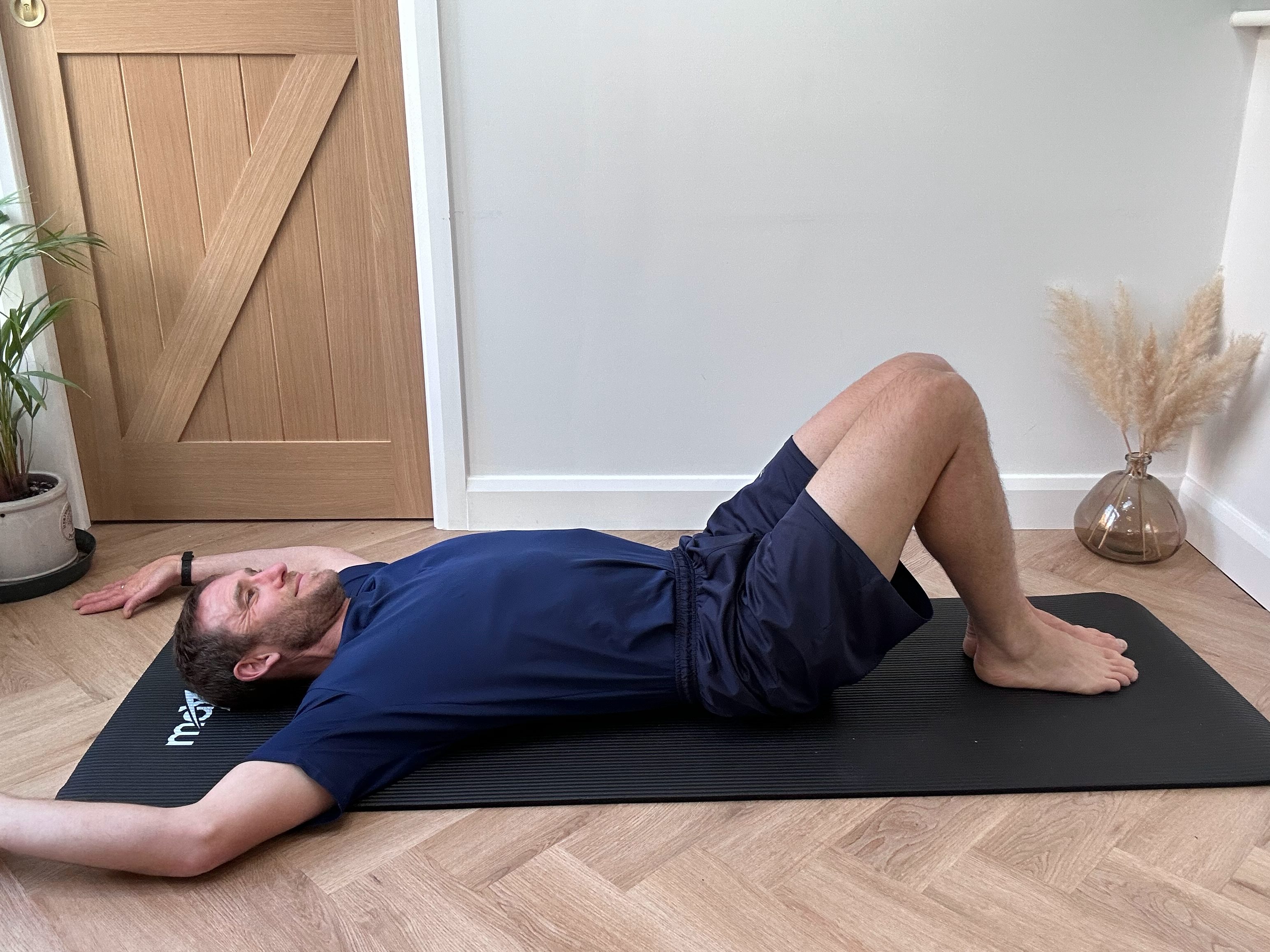
Floor Angels Exercise: How to Do It Step by Step
Most people don’t realise how stiff and restricted their upper body has become until they try this exercise. If your shoulders feel rounded, your upper back feels tight, or your…
-
Upper Trapezius Stretch (Neck Side Stretch)
Step-by-step guidance for Upper Trapezius Stretch, including setup, movement cues and when to stop or seek advice.

-
Theraband Internal Rotation: How to Do It
Step-by-step guidance for Theraband Internal Rotation, including setup, movement cues and when to stop or seek advice.

-
Resistance Band Shoulder External Rotation
Step-by-step guidance for Resistance Band Shoulder External Rotation, including setup, movement cues and when to stop or seek advice.

-
Isometric Shoulder External Rotation (Wall Press)
Step-by-step guidance for Isometric Shoulder External Rotation, including setup, movement cues and when to stop or seek advice.

-
Brügger’s Relief (Postural Reset Exercise)
Step-by-step guidance for Brügger’s Relief, including setup, movement cues and when to stop or seek advice.

-
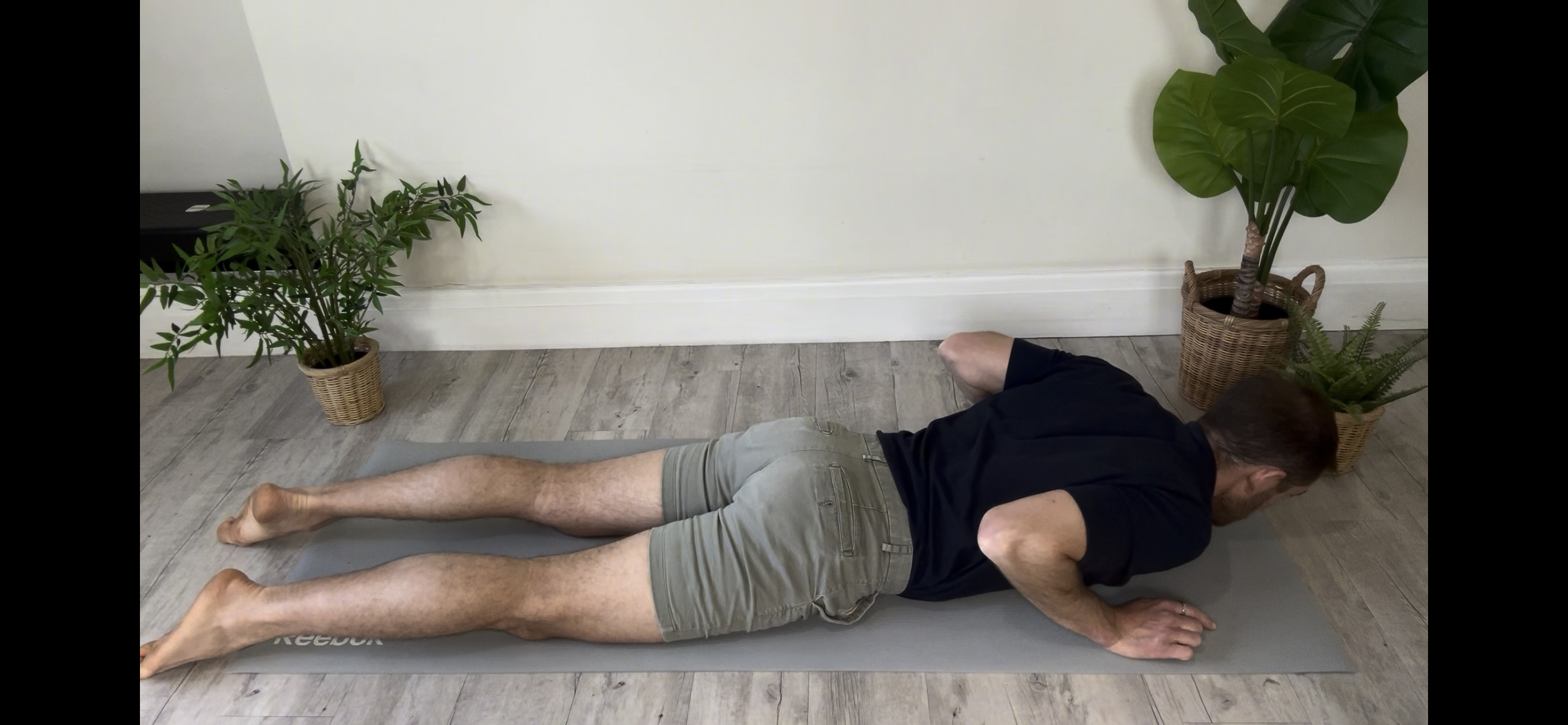
Cobra Stretch (Prone Extension)
Step-by-step guidance for Cobra Stretch, including setup, movement cues and when to stop or seek advice.
When to Seek Help
You should seek professional advice if your symptoms are worsening, not improving over time, or affecting your daily activities.
This is especially important if you experience:
- Persistent pain that doesn’t settle
- Weakness or loss of movement
- Pain following injury or trauma
Getting the right diagnosis early can make recovery much easier.
Getting the right diagnosis early can make recovery much easier.