
Mid Back & Shoulder Blade Pain: Causes, Conditions & Exercises
Mid back and shoulder blade pain is one of the most common and yet misunderstood complaints I see in clinic. It’s often linked with neck issues and/or low back problems but can often also be the only area of pain. And the most annoying thing about these issues — the pain is often just out of reach!
This page is designed to help you understand why pain develops in this area and what factors commonly contribute to it.
On this page you’ll learn:
- Common causes including rib joints, shoulder blade movement and mid-back (thoracic) stiffness
- How spinal shape and genetics play a role
- Why posture advice alone often isn’t enough
- Exercises and products on this site that will help reduce strain and improve comfort
Common Causes of Mid-Back & Shoulder Blade Pain
The comments I hear from patients are often things like:
- “It feels deep, like it’s underneath my shoulder blade”
- “It’s like a sharp knife or stick constantly poking into my back”
- “My shoulder blades feel like they’re grinding”
- “Sometimes I get a sharp pain when I breathe or twist”
Quite often patients insist on asking me to listen to their clicky shoulders as they grind and crunch — if this is you, don’t worry, it’s super common and can be helped!
1. Rib Joint Problems
When these joints become irritated and sore, patients often report:
- Sharp pain or a feeling of being ‘stuck’ near the shoulder blade
- Pain on a deep breath
- Pain when lying down
- Discomfort when twisting
2. Shoulder Blade Movement Issues
This is the classic clicky, grindy shoulder. Classic symptoms often include:
- A ‘catching’ pain when moving the arm or lifting
- Muscle aches around the shoulder blade and lower neck
- A feeling of instability around the shoulder
3. Thoracic Spine Stiffness
Our spines need to move. Many modern lifestyles limit that movement. The most obvious contributors are prolonged sitting, desk or laptop work, driving for long periods, and lack of variation of movement.
Stiffness can have a domino effect — stiffness in the spine leads to tightness in the surrounding muscles, which affects the way the shoulder blades work. This leads to gradual, persistent pain rather than a sudden injury.
Common Conditions
Understanding the Mid-Back & Shoulder Blade Region
The mid-back region is known as the Thoracic Spine. There are 12 thoracic vertebrae — and the key distinguishing feature is that this is where the ribs attach.
This means in just this small area there are 12 spinal (facet) joints on each side and 12 rib joints attaching to the spine on each side — that’s 48 joints in just this small area that have to function in harmony together.
On top of this, the shoulder blade bones (scapulae) have to glide over the ribs, held in place and moved by 17 muscles.
The thoracic region is naturally curved, very mobile, acts as the base for shoulder blade movement, and plays a major role in breathing. If you experience pain in your back when taking a deep breath, you likely have a rib joint problem.
How Spinal Shape & Genetics Play a Role
One factor that is often overlooked is genetics. Not everyone’s spine is shaped the same, and certain variations make a person more prone to certain problems — such as a more pronounced thoracic curve, or a more forward head position and rounded shoulders.
I often feel a bit sorry for patients who come in with well-meaning spouses or parents saying “I keep telling them to stand up straight, but they keep slouching.” The problem is — they simply cannot do it. They are physically unable to adopt certain positions for long because their body structure will not allow it.
There’s nothing I can do to change the shape of a spine — but this doesn’t mean pain is inevitable. It does mean some people have to manage their spines more carefully than others.
Why Posture Advice Alone Isn’t Enough
Posture advice is often well intentioned, but holding yourself rigidly upright is often not realistic when working — and for some people, simply not possible given their body’s structure.
A more effective approach focuses on adopting comfortable, supportive positions whenever possible, varying posture regularly, and encouraging regular movement. This is where exercises, workstation set-up and the right equipment matter far more than willpower.
Equipment That Can Help Reduce Daily Strain
The right equipment doesn’t ‘fix’ posture — it reduces the load on vulnerable areas.
Standing Desks
Standing desks reduce prolonged sitting, allow position changes throughout the day, and encourage a more natural spinal position while working.
Ergonomic Chairs
For mid-back pain, chairs need to support more than just the lower back. Look for thoracic (mid-back) support, adjustable arm-rests, a recline option, and a decent head rest.
Back Rests & Lumbar Supports
Often useful for driving and can fit in a rucksack, so you can take them with you for seats not shaped for your spine.
Posture and Sustained Loading
Long periods of sitting — particularly with a rounded upper back — are one of the most common contributors to mid-back and shoulder blade pain. The thoracic spine is not designed to hold one position for extended periods. Repeated small loads accumulate, and the joints and surrounding muscles become sensitised over time.
Shoulder Blade Muscle Weakness
The muscles that control the shoulder blade — including the rhomboids, serratus anterior and lower trapezius — stabilise the upper back during arm movement and sustained posture. When these are weak or poorly coordinated, the thoracic joints and surrounding tissue can be placed under increased strain, particularly in people who work at a desk for long periods.
Thoracic Stiffness and Reduced Mobility
The mid-back naturally tends towards stiffness, especially in sedentary individuals. Reduced mobility in the thoracic spine can place greater demand on the neck and lower back when reaching, lifting or rotating — contributing to symptoms in those areas as well as locally in the mid-back.
Why Isn’t My Mid-Back Pain Getting Better?
Mid-back pain that persists often does so because the underlying contributors — particularly sustained posture, shoulder blade weakness or thoracic stiffness — have not been adequately addressed. Hands-on treatment can reduce pain and restore movement, but without strengthening and postural change, symptoms frequently return. A programme combining mobility, strength and load management tends to produce the most lasting results.
Is My Mid-Back Pain Serious?
Most mid-back pain is not sinister. Seek prompt advice if your pain came on suddenly without a mechanical cause, is accompanied by difficulty breathing or chest pain, or is associated with unexplained weight loss or night sweats. Rib pain that wraps around to the front of the chest following a minor incident may indicate a rib stress fracture and should be assessed promptly.
What Helps with Mid-Back Pain?
Effective management usually involves manual therapy to restore thoracic mobility and reduce joint sensitivity, targeted exercises for the shoulder blade and upper back muscles, and practical changes to workstation setup and movement habits. The exercises below provide a starting point for building movement and strength in this area.
Ready to Get a Proper Assessment?
Understanding what’s driving your pain is the first step. Book a movement assessment and get a clear picture of what’s going on — and what to do about it.
Exercises for Mid-Back & Shoulder Blade Pain
-
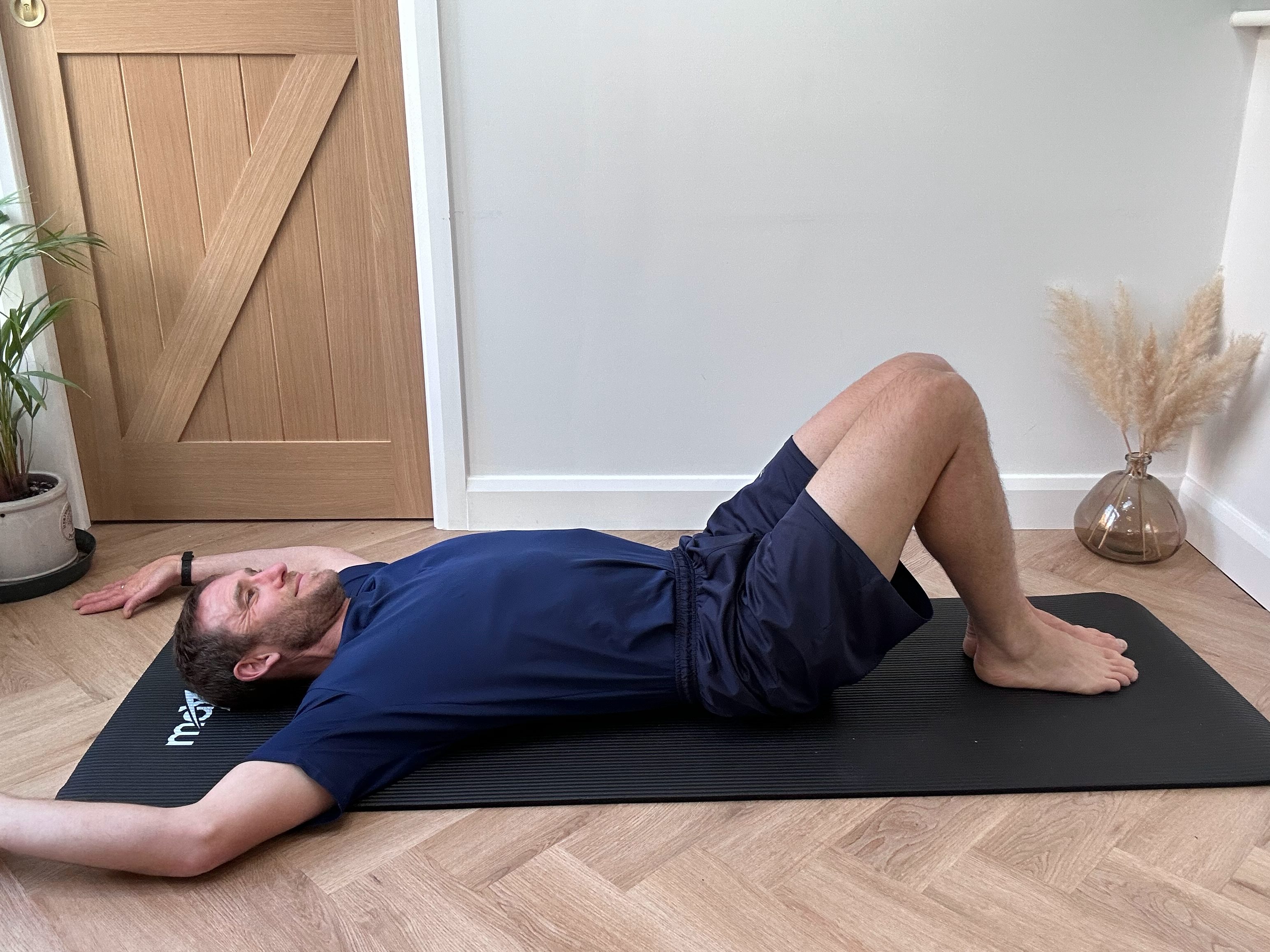
Floor Angels Exercise: How to Do It Step by Step
Most people don’t realise how stiff and restricted their upper body has become until they try this exercise. If your shoulders feel rounded, your upper back feels tight, or your…
When to Seek Help
You should seek professional advice if your symptoms are worsening, not improving over time, or affecting your daily activities.
This is especially important if you experience:
- Persistent pain that doesn’t settle
- Weakness or loss of movement
- Pain following injury or trauma
Getting the right diagnosis early can make recovery much easier.
Final Thoughts
Understanding your own structure and supporting it with the right movement, exercises and equipment is often far more effective than chasing the ‘perfect posture’ — which simply does not suit everybody’s body.
Next steps: explore the related conditions and exercise pages to gain a better understanding of what’s driving your symptoms, and find the right products for your needs.