Understanding the curve
Have you ever thought:
- “My spine feels out of alignment.”
- “My clothes never fit evenly.”
- “One of my shoulders is higher than the other.”
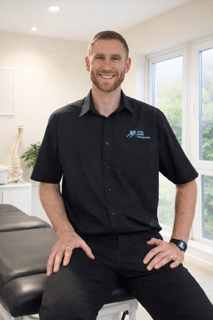
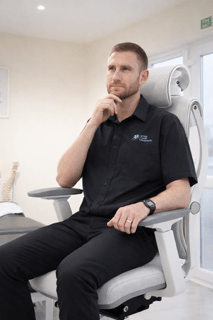
These are all common things I hear from patients after nearly 20 years working as a chiropractor.
When I assess their spines and diagnose them with scoliosis, they are initially extremely worried—you might be feeling the same right now.
In most cases, however, I am able to reassure them.
Many people with scoliosis live completely normal lives without significant limitations—my wife Sarah is one of them!
However, understanding what the condition actually means — and how to support the spine properly — can make a big difference to long-term comfort. Your scoliosis can get worse over time without the right management.
WHAT THIS PAGE WILL HELP YOU UNDERSTAND
After reading this page, you should understand:
• What scoliosis actually is
• The most common symptoms I see in clinic
• Why scoliosis develops
• When scoliosis may cause back pain
• Practical day-to-day strategies that help manage symptoms
• Exercises that support spinal balance
• When it may be appropriate to seek further medical advice
If your symptoms include pain travelling into the leg, you may also want to read my Sciatica page (LINK).
If your pain worsens when bending or sitting, my Disc Bulge / Herniation page (LINK) may also be relevant.
WHAT IS SCOLIOSIS?
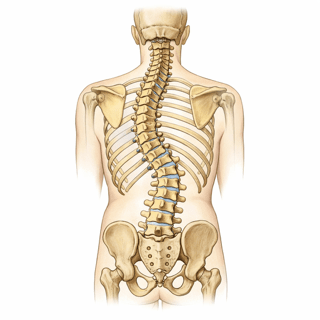
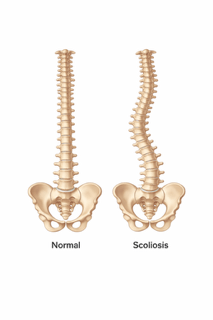
Scoliosis simply means that the spine curves sideways when viewed from behind.
A healthy spine naturally has curves when viewed from the side, but from the back it usually appears relatively straight.
With scoliosis, the spine develops a sideways curve that may also involve a small degree of rotation in the vertebrae.
This rotation is often why people notice subtle changes such as:
• One shoulder appearing slightly higher
• One shoulder blade sticking out more than the other
• Uneven waist or hip position
Many curves develop during adolescence while the body is growing, although mild scoliosis can go unnoticed until adulthood. I’m often the first person to diagnose it in people in their 60s and 70s!
The important thing to understand is that most scoliosis curves are mild and remain stable throughout life.
COMMON SYMPTOMS I SEE IN CLINIC
Not everyone with scoliosis experiences symptoms.
However, when people do come to see me about it, the most common issues include:
• A dull ache in the mid or lower back
• Muscle fatigue after long periods of standing
• Stiffness after sitting for long periods
• Tightness on one side of the spine
• Occasional discomfort around the ribs or shoulder blade
In many cases the pain is not caused directly by the curve itself.
Instead it is related to muscle fatigue and uneven loading around the spine. This can in turn lead to other common spinal conditions such as disc bulges and sciatica LINK
If your symptoms feel more like a general ache across the lower back rather than pain in one specific spot, you may also find it useful to read my Mechanical Low Back Pain page (LINK).
WHY DOES SCOLIOSIS DEVELOP?
In many cases, particularly in teenagers, the exact cause of scoliosis is unknown. Scoliosis affects 2-3% of adolescents.
This is known as idiopathic scoliosis, which simply means the curve developed without a clear underlying cause.
Other factors that can contribute include:
• Changes in spinal growth during adolescence
• Degenerative changes in the spine later in life
• Uneven loading of the spinal joints over many years
In older adults, scoliosis can sometimes develop gradually due to age-related changes such as disc degeneration or arthritis.
If these changes irritate nearby nerves, symptoms may sometimes overlap with conditions like spinal stenosis (LINK) or disc problems (LINK).
WHEN DOES SCOLIOSIS CAUSE BACK PAIN?
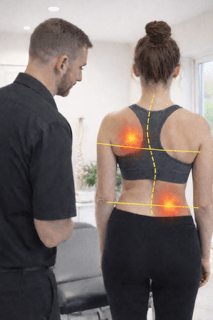
When discomfort does occur, it is usually related to how the surrounding muscles respond to the curve.
For example:
The muscles on one side of the spine may work slightly harder to maintain balance.
Over time this can lead to fatigue or tightness.
Similarly, joints above and below the curve may become stiff.
This is one reason why people with scoliosis often describe pain that comes and goes rather than remaining constant.
DID YOU KNOW?
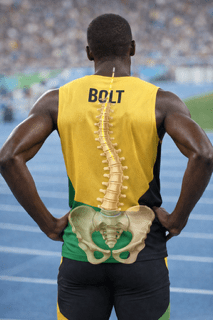
Even the world’s fastest man has scoliosis.
Usain Bolt, the Olympic sprint legend, has a noticeable curve and as a result, a slight leg length difference.
Throughout his career he needed regular treatment and focused strength work to keep his back balanced.
Despite this he went on to win eight gold medals and multiple world records.
It’s a great reminder that scoliosis doesn’t automatically mean limitation. With good management, many people with curved spines stay extremely active—although I’m not promising you’ll be running the 100 metres as fast as Bolt!
WHY DAILY HABITS MATTER
One pattern I frequently see with scoliosis patients is discomfort when sitting for prolonged periods. A scoliotic spine is already having to work that little bit harder to hold you up.
Do you find yourself:
• Fidgeting in your chair at work to get comfortable?
• Getting uncomfortable around your shoulders or low back when driving?
• Unable to fully relax in the evening due to spinal niggles?
The tension isn’t random—it’s your spine telling you it’s working too hard.
Imagine bending a flexible twig and holding it there for hours. Eventually that branch is going to weaken under the strain.
Introducing regular movement can make a noticeable difference.
One simple strategy that many of my patients benefit from is alternating between sitting and standing during the working day.
I always recommend desk workers to invest in a quality height-adjustable standing desk
(Standing desk LINK)
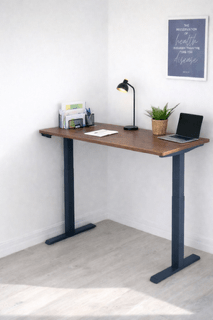
Alternating between sitting and standing helps with three things:
- It reduces strain building up in one place
- It encourages natural movement and activation of postural muscles
- It helps reduce back and shoulder tension
Even switching position every hour helps reduce sustained strain on the spine.
This is one of the easiest wins if you want to help prevent your scoliosis from causing long- term issues .
You can view the model which I use myself, as well as other models that I recommend to patients on my product page here LINK.
IS YOUR CHAIR THE RIGHT MATCH FOR YOUR SPINE?
How do you know if your chair is the right match for your spine?
You would have to be extremely lucky to be able to find the perfect chair for your uniquely shaped spine as everybody’s spine is a different shape and size—especially one with a scoliosis.
So, what’s the answer?
You need a chair that you can adjust to the shape of YOUR spine.
With scoliosis, a fixed, unsupportive chair can slowly pull your body into positions that increase strain and fatigue.
An ergonomic chair with multiple adjustment points allows you to adapt the setup to your spine — not force your spine to adapt to the chair.
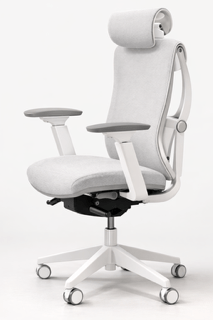
The chairs I recommend have:
- Adjustable seat height – so your hips, knees and feet can sit in a balanced position.
- Adjustable lumbar support – to support the natural curves of your lower back
- Adjustable armrests and recline options – so your shoulders and upper spine aren’t constantly under tension
- Adjustable neck supports – so you can adapt your neck to the most comfortable position for you.
Because every scoliosis curve is different, having these adjustments gives you the freedom to fine-tune your posture throughout the day.
Small changes in support can mean less pressure building in your back, fewer aches in your shoulders, and a much more comfortable working day overall.
If you’re going to spend thousands of hours sitting each year, having a chair that properly supports your spine is one of the simplest upgrades you can make for your long-term back health.
View my recommended chairs here (LINK)
EXERCISES THAT SUPPORT THE SPINE
Exercise is one of the most helpful long-term strategies for people with scoliosis.
The goal is not necessarily to “straighten” the spine completely—unfortunately it is not generally possible to make a scoliotic spine straight again…even if you’re the best chiropractor in the world!
Instead we focus on improving how the spine functions.
This usually involves:
STEP 1. Gentle spinal mobility exercises to reduce stiffness
(Mobility exercises LINK)
STEP 2. Postural exercises to improve muscular balance
(Posture exercises LINK)
STEP 3. Core strengthening to improve spinal stability
(Core exercises LINK)
Consistency tends to matter far more than intensity. If you’re new to doing exercises for your spine, follow this plan:
- Start with one or two exercises from Step 1 for a week or two.
- Introduce one or two extra exercises from Step 2 for another week or two.
- Introduce one or two extra exercises from Step 3.
Now continue with this group of 3-6 exercises several times per week. You will likely start to see improvements in your symptoms after 4-6 weeks.
WHAT ABOUT NECK PAIN WITH SCOLIOSIS?
Sleep is when the body recovers from the stresses of the day.
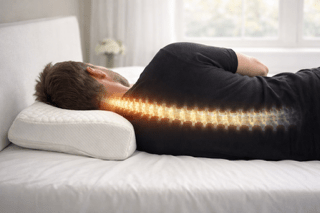
If your pillow does not support your spine well, it can be uncomfortable getting to sleep and contribute to morning stiffness.
Many of my patients with scoliosis notice improvement when they use a pillow that supports neutral neck alignment.
One pillow I often recommend to patients is the Groove Pillow, which is designed to support both side and back sleepers.
(Pillow LINK)
Small improvements in sleep support can make a noticeable difference over time.
FREQUENTLY ASKED QUESTIONS
- Can scoliosis be corrected with exercise?
Exercise usually cannot completely straighten a structural scoliosis curve. However, it can significantly improve strength, posture and overall comfort.
- Will scoliosis get worse with age?
Many mild curves remain stable throughout adulthood. In some cases, age-related changes in the spine may influence curvature later in life. This is why strength exercises are so important to support the spine.
- Does scoliosis run in families?
Yes—scoliosis can run in families and genetics are believed to play a role. However, the exact genes aren’t fully understood, and not everyone with a family history develops it.
WHEN TO SEEK FURTHER ADVICE

You should seek professional assessment if you notice:
- Rapid worsening of spinal curvature.
- Breathing difficulties.
- Persistent or severe back pain.
- Numbness, weakness or tingling in the arms or legs.
- You find your scoliosis affecting daily activities or mobility.
- Your child is growing and the curve seems to be progressing
In some situations, imaging such as an X-ray may be recommended to assess the degree of curvature.
FINAL THOUGHTS
Scoliosis can sound worrying when first discovered.
In reality, many people manage it extremely well once they understand how to support their spine.
Regular movement, sensible strengthening exercises and good daily habits often make a significant difference.
The spine is a remarkably adaptable structure — and when given the right environment, it usually responds well.
DISCLAIMER
This content is for educational purposes only and does not replace individual medical advice.
If symptoms worsen or you are concerned about spinal changes, seek advice from a qualified healthcare professional.
Please note that some links on this page are affiliate links. I may earn a small commission if you purchase through them. I only recommend products that I would genuinely recommend to patients as well as family and friends.
 activehealthhub.co.uk