
Understanding the modern strain on your spine
What this page will help you understand
- What ‘tech neck’ or postural neck pain is
- Why prolonged screen use overloads the neck
- The common patterns and symptoms seen in clinic
- How daily habits contribute to ongoing pain
- Practical strategies to reduce strain
- How to prevent symptoms returning long-term
- When to seek further medical advice

Have you ever finished a day and thought?
“Why do my neck and shoulders feel so tight…when I haven’t really done anything?”
If this sounds familiar you’re not alone—and more importantly it’s fixable.
In clinic this is one of the most common neck patterns I see, and in many cases, it comes down to how you’re using screens throughout the day.
‘Tech neck’ is a fairly new term to describe this type of posture related neck pain caused by an increase in time being spent by people looking at screens. This may include:
- A phone
- An ipad
- A laptop
- A computer
As a chiropractor in Portsmouth, UK, with nearly 20 years’ experience, I sometimes joke that modern-day technology will keep me in work.
But it’s also no joke.
I have seen neck problems related to technology use, gradually increase over the years.
And it worries me to think what the next generation will be like as children spend more and more time on screens.
If you can relate to any of the above, keep reading to learn how you can avoid the technology trap not for only yourself—but for your family.

WHAT THIS PAGE WILL HELP YOU UNDERSTAND
After reading this page, you should understand:
• What ‘tech neck’ or postural neck pain actually is
- What causes ‘tech neck’
• The common symptoms and patterns I see in clinic
• Why screen use and desk work overload the neck
• Practical ways to reduce daily strain
• Which ergonomic workstation products are worth the investment
• Lifestyle changes and exercises that help build long-term resilience
• When to seek further medical advice
More importantly I’ll show you the exact changes I recommend to patients in clinic to reduce pain and prevent it coming back.
NB:
If your neck pain travels into your arm with pins and needles or numbness, you may want to read my Cervical Disc Bulge / Herniation or Nerve-Related Neck Pain pages (LINK).
Tech neck/postural neck pain is related to Mechanical Neck Pain LINK. Reading this page might also be helpful to you.
DOES THIS SOUND LIKE YOU?
Before we go further, see if this pattern feels familiar:
• You feel relatively okay in the morning
• Your neck/shoulders tighten as the day goes on
• It feels worse during/after screen time
• You find yourself stretching or rubbing your neck regularly
• It improves when you lie down or move around
If that sounds like you, this is very likely a postural loading issue—and could be screen time related.
WHAT IS THE CAUSE OF ‘TECH NECK’?
‘Tech neck’ is a form of mechanical neck pain caused by prolonged forward head posture and sustained screen use.
Did you know that your head weighs roughly the amount of a bowling ball?
Think about it.
That’s actually quite a lot of weight that you’re neck and shoulders are having to balance above your head!
When it sits directly over your shoulders — your neck handles that load well.
But when your head moves forward (which happens when using phones and laptops), the load on your neck increases significantly.
The further your head moves forward, the harder your neck muscles have to work just to hold it there.
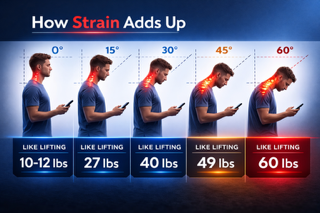
Over time, this leads to:
• Muscle fatigue
• Joint irritation
• Increased tension
• Reduced movement
This isn’t immediate damage.
It’s accumulated strain over time.
COMMON SYMPTOMS I SEE IN CLINIC
When I see patients who I suspect have tech neck, they often present with similar patterns.
• Tightness at the base of the neck
• Aching across the shoulders or between the shoulder blades
• Pain that builds throughout the day
• Relief when lying down or moving around
• Stiffness when turning your head
• Headaches starting from the neck
A common mistake that people often make is thinking that if they don’t work on a computer or laptop all day, then they are safe from ‘tech neck’.
But daily screen time adds up.
CLINIC STORY:
Recently, I had a retired lady called Christine who had been suffering with ongoing neck pain.
- No trauma
- No previous injuries
- Otherwise fit and active
The doctor had diagnosed her with arthritis.
I wasn’t convinced.

My X-rays confirmed that her spine was in good condition.
So, what was the cause of her problem?
I questioned her further on her lifestyle.
Regular exercise. Healthy diet. Enjoying retirement.
However, on further questioning she did inform me that:
- She used her phone at times for messaging/Facebook/YouTube
- She used her ipad in the evenings to play online scrabble
- She often used the computer for her volunteer work (bookkeeping for the church)
When we added up the TOTAL time that she was on technology, it added up to at least 3 hours per day. That doesn’t sound like much.
But this is how strain compounds over time if you are not aware of it. Especially if you’re not aware of how to manage it.
Once we had identified the main causes of her problem, we were able to completely resolve her problem with some treatment and by following the strategy set out below.
WHAT ACTUALLY HELPS?
5 PRACTICAL STRATEGIES
When it comes to ‘tech neck’, I have found that the biggest lifestyle improvements come from integrating a combination of the following changes:
1. YOUR WORKSTATION SETUP (BIGGEST IMPACT)
If you fix only one thing, fix this.
Your workstation setup is the biggest driver of ongoing neck strain—and also one of the fastest things to improve.
In clinic, these are the first changes I recommend to patients who sit for long periods:
• Raise screen to eye level (eye line should be just above centre screen)
• Use an adjustable ergonomic chair (LINK)
• Use a height-adjustable standing desk (LINK)
Should YOU be using a standing desk?
Can you relate to that feeling of constantly wriggling in your chair or wanting to move your neck every 5 seconds to get comfortable?
That’s your spine gently asking you to move.
Listen to it.
One of the simplest changes you can make is introducing position variation during the workday.
Instead of sitting continuously for hours, alternating between sitting and standing allows the neck and upper back muscles to reset regularly.
A height-adjustable standing desk makes this incredibly easy—and for many people, it’s a game changer.
If you’re sitting for 6+hours a day and your neck tightens as the day goes on, this is one of the most effective upgrades you can make.
This is the exact desk I recommend to patients (and use myself): LINK
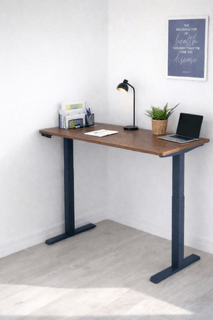
When used properly, it significantly reduces the build-up of tension and discomfort.
I recommend switching position every 45–60 minutes or as often as you need. The standing desks that I recommend from Desktronics (LINK) allow you to change to a comfortable position with the touch of a button in 6 seconds.


2. ERGONOMIC CHAIRS—HOW DO YOU KNOW WHICH ONE TO GET?
Most people shopping for an ergonomic chair fixate on lumbar support.
Of course, this is important.
But when it comes to neck problems, there are nuances that are often overlooked.
Here are my BIG THREE must haves when it comes to improving ‘tech neck’:
- Adjustable neck support
- Adjustable armrests
- Adjustable recline options
Do you remember the diagram earlier relating to the weight of your head?
You need the option to be able to sit back, support your head against an adjustable headrest, and have your arms relaxed.
Otherwise that bowling ball is going to continue to weigh you down and your discomfort will persist.
If you’re spending several hours a day sitting, investing in the right chair can make a significant difference to how your neck feels by the end of the day.
These are the chairs I recommend most often to people with neck tension LINK
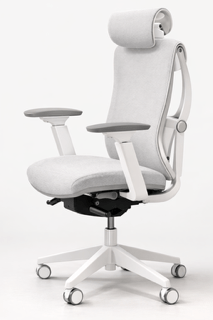
TOP TIP: If you are sitting in an ergonomic chair using a hand-held device, find a fairly thick pillow to put on your lap to rest your hands/the device on.
This allows you to raise the level of the device to your eye line with your arms (and therefore your shoulders) in a relaxed position.
3. FANCY A LIE DOWN?
This is something many people don’t consider.
Have you experienced that feeling when you finally get into bed and all of the tension around your neck and shoulders starts to fade?
Why not do that more often?
A rotating laptop desk allows you to:
• Work while lying down comfortably
• Reduce neck and shoulder strain
• Stay productive without aggravating symptoms
I’m not saying it’s always convenient or practical to do this. But if you find lying down is relieving, doesn’t it make sense to do it more when you can?
You can see how I use mine in the picture below. When I am at home writing for my website, I make sure I alternate between sitting, lying and standing.

If you’re constantly feeling like you need to lie down to relieve your neck tension and are able to work/use your screen in this position, then this desk LINK would most likely lead to huge improvements.
4. MOVE MORE, HURT LESS
Your neck doesn’t like being still for long periods.
Helpful habits include:
• Gentle neck stretches/mobility exercises (LINK)
• Short breaks every 30–60 minutes
- Changing positions regularly
CLINIC STORY: I once had a patient who had developed a chronic neck ache. Whilst undergoing treatment with me, he took my advice to another level and set an alarm to go off every 30 minutes when working at home on his laptop!
As soon as the alarm sounded, he made sure he did 2 minutes of neck mobility/posture exercises such as the ones here LINK.
After 2 weeks of doing this, his neck issue was all but sorted. I’d like to say it’s because my chiropractic treatment is the best in Portsmouth and possibly the world!
But if I’m honest, I’m pretty sure he saved himself plenty of money on treatment by being so disciplined with his movement habits.
Could you do something similar?
Have a try with the exercises above. When people get started with daily posture and mobility exercises, they are often surprised with the substantial improvements that they make.

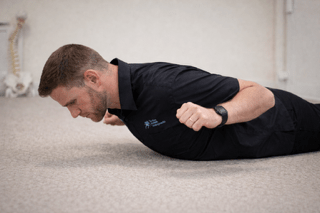
5. BUILDING STRENGTH (LONG-TERM FIX)
As pain gradually settles, strengthening becomes key.
I can’t stress this enough.
Focus on:
• Neck stability exercises LINK
• Upper back strengthening LINK
• Postural muscle activation LINK
Start gradually and build over time. It doesn’t need to be all or nothing.
Consistency is far more important than intensity. Start with this simple exercise now LINK.
Do it every day for a week. Add another one like this one LINK to start activating your postural muscles more often.
Strength training takes time.
Results won’t happen overnight. But when you put the work and effort in and start to recognise the improvements, there’s no better feeling.
HOW LONG DOES IT TAKE TO IMPROVE?
This is one of the most common questions I’m asked.
The honest answer is—it’s impossible to say exactly.
But here are some rough guides that I aim for when treating neck issues relating to tech neck:
• Mild cases: 1–3 weeks
• Moderate cases: 4–6 weeks
• Persistent cases: several months
Results also depend heavily on age, overall health status, and of course all of the factors already discussed.
The bottom line:
The more areas you improve, the better the outcome.
WHEN TO SEEK FURTHER MEDICAL ADVICE

You should seek medical advice if you experience:
• Progressive arm weakness
• Persistent numbness or tingling
• Severe pain following trauma
• Symptoms not improving over time
These are not typical of postural neck pain.
FINAL THOUGHTS

‘Tech neck’ is incredibly common — and it’s not going away anytime soon.
But it’s also very manageable.
The mistake most people make is thinking it will settle on its own…
while continuing the same daily habits that caused it.
Most people improve when they:
• Change their daily setup
• Reduce sustained positions
• Move more regularly
• Build strength gradually
NEXT STEPS:
If you recognise yourself in this page, start by fixing the areas that are easiest to change:
- Your workstation setup (this has the quickest impact)
- Your sitting position and daily movement habits
- Introducing simple strength exercises
If you want to short cut the process, I’ve linked the exact products, exercises, and strategies I recommend to patients throughout this page.
 Active Health Hub