Understanding what “wear and tear” in the spine really means

Disc degeneration is a very common, age-related condition of the spine, and in most cases, it is not dangerous or disabling.
If you’ve recently had an X-ray or MRI and been diagnosed with “disc degeneration” or “degenerative disc disease”, your first reaction may have been something like:
• “Does this mean my spine is wearing out?”
• “Is this arthritis?”
• “Am I going to end up in a wheelchair?”
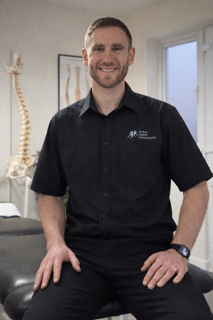
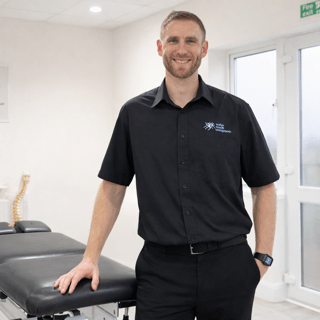
I’ve been taking X-rays of patients for nearly 20 years in my Chiropractic Clinic in Portsmouth.
When I show patients their X-rays and explain that there are signs of disc degeneration, many immediately assume something serious is happening to their spine.
I’m pleased to say that the truth is usually far more reassuring.
Disc degeneration is one of the most common findings I see when reviewing spinal X-rays, and in many cases it’s simply part of the natural ageing process.
Many people live full, active lives with degenerative changes in their spine — often without even realising they have them.
However, it doesn’t mean you can take the condition for granted.
Understanding what these changes mean — and how to support the spine properly — can make a big difference to your long‑term comfort.
WHAT THIS PAGE WILL HELP YOU UNDERSTAND
After reading this page you should understand:
• What disc degeneration actually is
• What causes it
• How it relates to spinal arthritis
• When it may contribute to neck or back pain
• Practical day‑to‑day habits and products that support the spine
• Exercises that improve spinal strength
• When further medical advice may be appropriate
(If you’ve been with diagnosed disc degeneration in the neck following a road accident, you should also visit my WHIPLASH PAGE)
WHAT IS DISC DEGENERATION DISEASE?
Your spine is made up of vertebrae (bones in the spine) stacked on top of one another.
Between each of these bones sits a spinal disc, which acts like a shock absorber and allows your spine to bend and move smoothly.
Over time, these discs naturally change.
They may slowly lose some of their water content and flexibility. On scans/X-rays this can appear as:
• Slightly thinner discs
• Reduced disc height
• Structural changes within the disc
Below is an X-ray of one of my patients where you can see the disc (the gap between the bones) looks thinner.
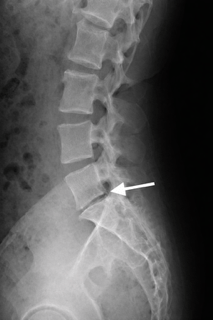
This is what doctors refer to as disc degeneration.
DISC DEGENERATION AND ARTHRITIS
Disc degeneration is often mentioned alongside arthritis of the spine. People often think of arthritis as some kind of disease that keeps on spreading.
In fact, that’s rarely the case.
Yes, it’s fair to say that disc degeneration can lead to arthritic changes.
And if you have been diagnosed with disc degeneration but are also experiencing pain/pins and needles/numbness in your leg made worse by standing/walking, you should visit my SPINAL STENOSIS Page LINK.
But the truth is, arthritic changes in the spine are often very small focal areas like the X-ray above.
As discs gradually lose a little height over time, the small joints at the back of the spine — known as facet joints — may take on slightly more load.
Over many years these joints can develop arthritic changes, similar to what can happen in knees or hips.
When I speak to some of my patients about this, they often assume that their spine is:
- Failing
Or worse…
- Crumbling
It simply reflects the years your spine has spent supporting your body—a bit like the tyres on a car. Over time they naturally show a bit of wear from miles of use, but it doesn’t mean they can’t still do the job well.

FACT: Research in 2015 looking at MRI scans of more than 3000 people who had never had back pain found disc degeneration in:
- 37% of people in their 20s
- 80% by middle age
- 96% of people in their 80s!
Which means a large proportion of people walking around perfectly pain-free still had MRI findings that might be labelled as “degeneration”.
WHY DISC DEGENERATION HAPPENS
So, you might be wondering now, what actually causes disc degeneration? It’s usually something that develops gradually over many years.
Several factors can influence how quickly these changes appear:
• Natural ageing (just like our skin wrinkles, our discs wear down!)
• Genetics
• Repetitive loading of the spine
• Previous injuries (that slip 10 years ago might be catching up with you)
• Long periods of sitting
WHEN DISC DEGENERATION DISEASE CAUSES SYMPTOMS
As we’ve seen from the research above, some degenerated discs cause no issues at all.
But I expect the reason you are on this page is that you are in pain.
This occurs if surrounding tissues become irritated.
If you’ve got symptoms from your disc, you may notice:
• Spinal stiffness after sitting for long periods
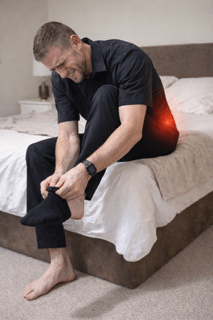
- Spinal stiffness in the mornings (the classic struggling to put socks on!)
• A dull ache in the lower back or neck
• Reduced flexibility
• Occasional flare‑ups after heavy activity
HOW CAN YOU REDUCE THE SYMPTOMS OF A DEGENERATED DISC
Your spine is designed for movement and variation.
What it does not tolerate well is being held in one position for hours at a time.
Many people now spend large parts of the day:
• Sitting at a desk
• Sitting in the car
• Sitting again in the evening
When my patients start introducing more movement and posture variation during the day, it often makes a noticeable difference.
A SIMPLE CHANGE FOR RESETTING YOUR DISCS
One of the most helpful changes I see patients make is alternating between sitting and standing when doing activities such as:
- Working
- Knitting
- Doing arts and crafts
- Watching box sets on Netflix
Think about your discs when they are subjected to continuous pressure in the same position.
It’s like a sponge being squeezed without ever being allowed to re-expand.
When it does finally release, it’s so squashed into shape that it struggles to go back to its original form.
This is you trying to stand up after prolonged sitting and having to slowly uncoil your spine while you groan from the stiffness!
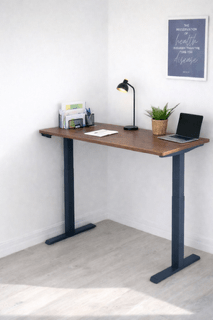
A height‑adjustable desk is the best solution (VIEW MY RECOMMENDED STANDING DESKS HERE)

Changing position regularly helps:
• Reduce prolonged pressure on the discs
• Activate postural muscles
• Prevent stiffness building up
There are several desks on the market, but not all are made equal.
I’ve researched and tested several over the years. You can see the exact model and why I’ve chosen it here (Link to product page for standing desks).
YOUR SPINE SUPPORTS YOU…BUT ARE YOU SUPPORTING YOUR SPINE?
Using a standing desk is a great start if you want to look after your spinal discs going forward.
However, if you still spend several hours sitting each day (and/or using a standing desk is not appropriate for you), the type of chair you use can make a huge difference.
When we sit, it changes our posture, forcing more load on certain areas… maybe that worn disc of yours has been one of the victims.
Ask yourself:
- Do you actually feel supported in your chair?
- Are you stiff in your spine when you stand back up?
- Is your chair really suited for your spine?
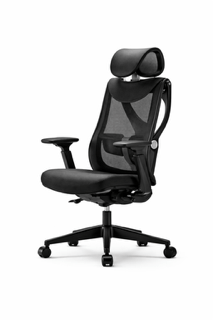
If so, then investing in an ergonomic chair with adjustable support is an easy solution. See the chair that I recommend for proper spinal support here.
The problem with a normal chair is that it is a set shape and size. And yet we are all completely different!
When you think about it, a standard chair is only shaped for one very lucky specific person.
The chairs I recommend have:
- Adjustable seat height – so your hips, knees and feet can sit in a balanced position
- Adjustable lumbar support – to support the discs of your low back
- Adjustable armrests and recline options – so your shoulders and upper spine aren’t constantly under tension
- Adjustable neck supports – so you can adapt your neck to the most comfortable position for you.
If your spine tightens every evening, it’s not what you did once—it’s what you’ve been doing all day.
Click here to finally own a chair that fits YOU and break the cycle! LINK TO PRODUCT PAGE

IS IT SAFE TO EXERCISE WITH DISC DEGENERATION?
It can be difficult to know what exercises are appropriate to do if you have disc degeneration.
Exercise is one of the most helpful long‑term strategies for managing degenerative spinal changes.
Exercise classes such as yoga and pilates can indeed be excellent for building:
- Support around the discs
- Flexibility
- Load tolerance
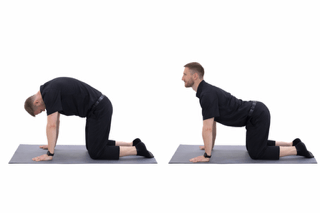
However, even the most cautious and educated teachers can sometimes expect too much too soon.
The reason?
Exercise classes are often TOO LONG to start with.
It’s a bit like that first exposure to sunshine after a long winter—10 minutes is enough before you start burning!
This is why, before starting any classes or programs, I always recommend a phased introduction to exercise.
Just like your skin in the sun, once your spine has had some exposure, it will start to get used to what you’re doing.
START MY 3 STEP DISC DEGENERATION EXERCISE PLAN NOW
You may have already tried exercise which aggravated the pain.
This is so common.
Understandably, this puts you off doing any more exercise.
The answer?
Introduce ONLY ONE exercise at a time.
Make sure of two things:
- The exercise is comfortable to do
- It does not increase the pain afterwards (a mild temporary ache is ok)
Once you are happy with the first exercise from STEP 1 below, and have done it for a few days, you can introduce a second. Then introduce an exercise from STEP 2, and so on
Taking action is the first step. Click on the exercises below in STEP 1 and get started with your first exercise.
STEP 1 – Gentle mobility exercises START WITH STEP 1 HERE
STEP 2 – Postural strengthening START WITH STEP 2 HERE
STEP 3 – Core stability exercises START WITH STEP 3 HERE
This will be the first step in showing your spine that it can move again—safely and confidently.

FINAL THOUGHTS
Being told you have disc degeneration can sound worrying at first.
In reality, these changes are extremely common and often simply reflect the years your spine has spent supporting you.
Your next steps are:
- Click on the related conditions if appropriate
- Upgrade your posture by purchasing one of my recommended desks and chairs
- Start with the exercise suggestions
DISCLAIMER
This content is for educational purposes only and does not replace individual medical advice.
If symptoms worsen or you are concerned about neck injury following an accident, seek assessment from a qualified healthcare professional.
Please note that some links on this page are affiliate links. I may earn a small commission if you purchase through them. I only recommend products that I genuinely trust for patients as well as family and friends.
 Active Health Hub