
A Practical Guide
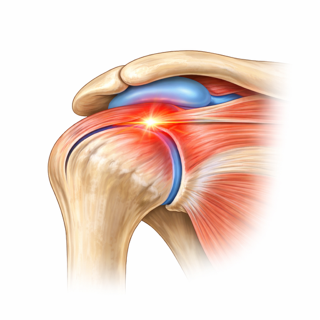
Shoulder impingement syndrome is one of the most common causes of persistent shoulder pain. It’s one of those conditions that becomes extremely frustrating.
You might be finding little things starting to become difficult such as:
- Reaching up to a cupboard
- Getting dressed
- Pouring the kettle
It often creeps in gradually. No big injury. No dramatic moment. Just a shoulder that starts to complain.
Over the years in clinic as a chiropractor in Portsmouth UK (Active Health), I’ve followed many of these injuries along the road to recovery.
Patients often ask me:
“Is this ever going to get better?”
I’ll be completely honest—the road is often a rocky one.
The good news… In the majority of cases, they resolve over time. However, they need to be fully understood properly first.
The aim of this page is to help you understand:
- What Shoulder Impingement is and Why it Causes Pain
- What the Common Symptoms of Shoulder Impingement
- The Most Common Causes of Shoulder Impingement Syndrome
- What Postural Habits Help
- Ergonomic Products that I Recommend to Aid Recovery
- Exercises that Help Shoulder Impingement Syndrome
- When to Seek Further Help

WHAT IS SHOULDER IMPINGEMENT SYNDROME?
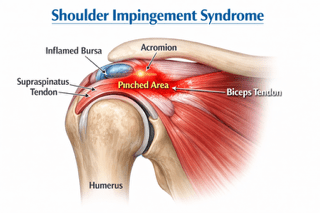
Shoulder impingement syndrome occurs when tendons and/or subacromial bursa become compressed/irritated in the space at the top of the shoulder during arm movement.
When this space narrows due to poor movement, posture, muscle imbalance and overload, the tissues become compressed.
Over time, this leads to inflammation, pain with overhead movement, and reduced shoulder function.
The painful structures are most commonly:
- The supraspinatus tendon (one of the rotator cuff tendons)
- The long head of the biceps tendon.
- The subacromial bursa (this normally protects the tendons but becomes inflamed)
When you raise your arm, several things happen at the same time:
- The humerus rotates
- The shoulder blade upwardly rotates
- The thoracic spine extends slightly
If that coordinated movement is lost, space narrows and the tendons become overloaded.
Over time, that overload produces pain.
It is rarely a single “pinch.”
It is usually repeated mechanical strain.
COMMON SYMPTOMS OF SHOULDER IMPINGEMENT SYNDROME
Shoulder impingement syndrome typically develops gradually and worsens with overhead activity. The most common symptoms include:
- Pain when lifting the arm overhead (especially between shoulder height and fully raised)
- Sharp pain with certain movements, particularly reaching or pressing
- Pain when reaching behind your back (e.g. fastening a bra or putting on a coat)
- Discomfort when lying on the affected shoulder, often disturbing sleep
- A dull ache in the outer or front of the shoulder
- Weakness when lifting or rotating the arm
- Reduced range of motion or stiffness
- Pain during repetitive overhead activities (gym, tennis, swimming, manual work)
- Front-of-shoulder pain if the biceps tendon is involved
- A painful arc of movement — discomfort typically felt between 60–120 degrees of arm elevation
CLINIC NOTE: Pain can often refer into the upper arm, making it quite difficult to tell where the exact pain is coming from
WHAT CAUSES SHOULDER IMPINGEMENT?
1️. Poor Shoulder Blade Mechanics
If the scapula does not rotate efficiently:
- The acromial space reduces
- The rotator cuff works harder
- Irritation develops
Rounded shoulders and thoracic stiffness make this worse (Link to hyperkyphosis page)
2. Thoracic Spine (Mid-Back) Stiffness
In my experience, this is where many rehab programs fall short. It is a mistake to only concentrate on the shoulder.
If your mid-back is stiff and flexed:
- The shoulder blade cannot sit properly
- Upward rotation is reduced
- The rotator cuff compensates
The shoulder blade rests on the ribcage.
If the ribcage doesn’t move well, neither does the shoulder.
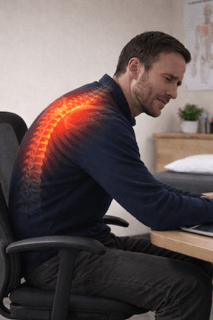
Quality movement and adequate strength in the thoracic spine is vital for a proper functioning shoulder
CLINIC NOTE: I once had a patient with rounded shoulders and a very stiff thoracic spine. Long hours sat at the computer followed by lifting weights in the gym caused him to develop an impingement syndrome.
From the outside it might have looked like the weight lifting was the problem. However, the primary cause of the problem was his postural positioning during the day.
3. Repetitive Overhead Load
- Gym pressing
- Swimming
- DIY
- Rapid increases in training intensity
A sudden increase in activity in an already fragile shoulder is a common trigger.
CLINIC NOTE: I had a patient once who would constantly aggravate her shoulder when hanging out the washing on the line. The solution was to use a lower drying rack instead so that she didn’t need to reach up. Small changes like this can allow the shoulder to heal.
4️. Prolonged Desk Posture (Highly Underestimated)
Eight hours of unsupported arm posture is often the real aggravator.
When your arms hang forward at a desk:
- Upper trapezius overworks
- Anterior shoulder compresses
- Scapular stabilisers fatigue
This is where most cases fail to improve — not because exercises don’t work, but because daily load remains unchanged.
HOW TO FIX SHOULDER IMPINGEMENT (PROPERLY)
Step 1: Reduce Daily Irritation
If you sit most of the day, your environment must support your shoulder.
This is of the utmost importance.
Standing Desks
Alternating sitting and standing reduces sustained forward shoulder posture.
A quality standing desk allows you to:
- Reduce thoracic flexion
- Improve shoulder blade positioning
- Change load every 45–60 minutes
If you’re unsure which model suits your workspace, I’ve listed the standing desks I recommend on my Product Recommendations Page as well as use personally in clinic LINK

They’re selected based on stability, height range, and long-term usability — not marketing claims.
Ergonomic Chairs (Arm Support is Critical)
For shoulder impingement, adjustable armrests are essential.
A proper ergonomic chair should provide:
- Height-adjustable armrests
- Lumbar support
- Recline option
Unsupported arms = sustained shoulder muscle load.
Supported arms = reduced irritation.
I’ve outlined the chairs I recommend — particularly those with proper arm support — on my Ergonomic Chair Recommendations Page LINK
If you’re spending 6–8 hours seated, this change alone could make the difference between a shoulder that remains painful and one that is able to recover.

Rotating Laptop Desk (For Position Variation)
One strategy I personally use and recommend is completely varying your position.
A rotating laptop desk that can be used when:
- Sitting
- Standing
- Lying down supported
Working briefly while lying supported can offload the strain from the thoracic spine and anterior shoulder.
I’ve included the adjustable rotating laptop desks that I use on my Products Page LINK
Variation is powerful.

Ergonomic Pillows (Sleep Matters)
Night pain is one of the most frustrating features of shoulder impingement.
A supportive ergonomic pillow helps:
- Maintain neutral neck alignment
- Prevent forward shoulder collapse
- Reduce overnight irritation
I’ve listed the ergonomic pillow that I recommend on my Products Page LINK. It has a special groove which supports the neck, which helps reduce the load on the shoulder. If you’re lying awake at night, not able to get to sleep, this may be the solution.
Sleep quality directly influences recovery speed.
CLINIC NOTE: Many patients benefit from hugging a pillow to support the affected arm.
STEP 2: Restore Movement
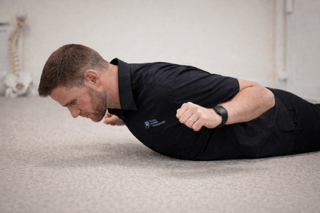
Rehabilitation should focus on:
- Scapular control
- Rotator cuff endurance
- Gradual overhead loading
- Thoracic extension strength/mobility
Avoid:
- Aggressive stretching into pain
- Jumping straight back into heavy pressing
- Ignoring mid-back stiffness
Consistency beats intensity.
EXERCISES THAT HELP SHOULDER IMPINGEMENT SYNDROME
The most effective shoulder impingement exercises usually include:
- Scapular retraction work
- Serratus anterior activation
- Rotator cuff endurance drills
- Thoracic mobility exercises
The shoulder rarely improves without addressing the mid-back. Explore my shoulder impingement exercises here LINK
WHEN IT MIGHT NOT BE IMPINGEMENT SYNDROME
Not all pain is caused by impingement syndrome. Other conditions can present with similar symptoms including:
- Rotator cuff and biceps tendinopathies LINK
- Frozen Shoulder LINK
- Acromioclavicular (AC) joint sprains LINK
If you’re not entirely convinced that your signs and symptoms match those of impingement syndrome, explore the other conditions through the links above for further clarity.
WHEN TO SEEK FURTHER HELP
Seek professional assessment if you experience:
- Sudden weakness after injury
- Inability to lift the arm
- Significant trauma
- Persistent night pain
- Numbness or tingling into the arm
- No improvement after several weeks of structured modification
In some cases, imaging or referral may be appropriate.
If unsure, get assessed properly.
FREQUENTLY ASKED QUESTIONS
How long does shoulder impingement take to heal?
Most cases improve within 6–12 weeks with proper load management and strengthening.
Is shoulder impingement the same as rotator cuff injury?
Impingement often involves rotator cuff irritation but is not always a tear.
Should I stop going to the gym?
Reduce painful movements temporarily, but avoid complete inactivity.
FINAL THOUGHTS

Shoulder impingement syndrome does not happen by accident.
It reflects:
- How your thoracic spine moves
- How your shoulder blade functions
- How your daily setup loads your shoulder
Fix the environment.
Restore movement.
Reload progressively.
That is what works long-term.
DISCLAIMER
This content is for educational purposes only and does not replace individual medical assessment.
I may benefit from a small commission if products are bought through my affiliate links. I never recommend anything that I would not buy myself or recommend to my patients.
 Active Health Hub