Freedom of movement starts here
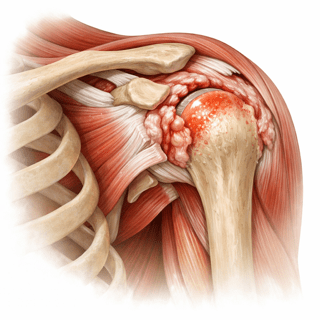
Frozen shoulder isn’t just ‘a bit of stiffness.’ It’s frustration when you can’t:
- Fasten a bra
- Reach into a cupboard
or
- Sleep comfortably at night
It’s the slow loss of movement that chips away at your confidence and independence.
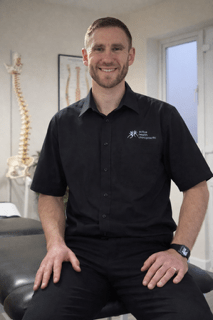
As a chiropractor for nearly 20 years, I’ve seen how this condition affects more than just the joint—it affects your daily life.
The good news… With the right advice, targeted mobility work and a structured recovery plan, frozen shoulder doesn’t have to define your future movement.
THE AIM OF THIS PAGE
This page will help you understand:
- What frozen shoulder (adhesive capsulitis) actually is
- The typical symptoms and stages
- How it differs from other shoulder injuries
- Realistic recovery timelines
- How to reduce daily aggravation
- What exercises are useful for frozen shoulder
- When further assessment is needed
When it comes to a frozen shoulder, you cannot rush recovery.
But you can support it properly.
WHAT IS FROZEN SHOULDER?
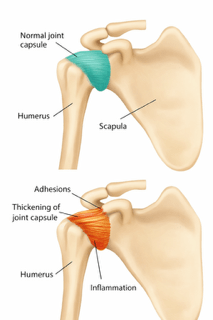
Frozen shoulder occurs when the capsule surrounding the shoulder joint becomes inflamed and thickened.
This leads to:
- Progressive stiffness
- Loss of movement in multiple directions
- Pain at end range
The key distinction is global restriction.
Even passive movement (when someone else tries to move it) feels blocked.
This is why aggressive stretching often makes early symptoms worse.
COMMON FROZEN SHOULDER SYMPTOMS
These are the common symptoms of frozen shoulder that I see in clinic:
- Gradual loss of shoulder movement in ALL directions
- Inability to reach overhead
- Difficulty fastening clothing behind the back
- Discomfort in bed
- Sharp pains in the shoulder joint when overstretched
- A feeling of the joint being stuck
It often develops without a clear injury.
Which makes it confusing — but not unusual.
THE THREE PHASES OF FROZEN SHOULDER
- Freezing Phase (2-9 months)
Increasing pain and gradual movement loss.
- Frozen Phase (4-12 months)
Less inflammation, significant stiffness.
- Thawing Phase (6 to 24 months)
Gradual return of mobility.
Most cases resolve over 12–24 months. I know it’s sometimes difficult to imagine it getting better, but understanding this reduces unnecessary anxiety.
TRUE STORY: One of my patients had a fall a few years back and badly broke her wrist. Due to the nature of the break, it took a long time to heal and she was unable to use that arm much.
Unfortunately, as time went on, the poor lady developed shoulder pain that gradually turned into a frozen shoulder! Her shoulder ended up taking longer to heal than the break… but she made a full recovery from both after 18 months.
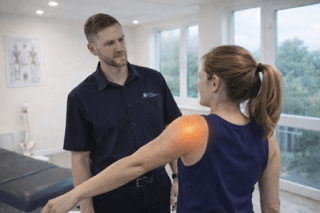
HOW FROZEN SHOULDER DIFFERS FROM SHOULDER IMPINGEMENT
One mistake I see often is shoulder conditions being wrongly diagnosed.
In particular, impingement syndrome and rotator cuff injuries can sometimes be thought to be a frozen shoulder.
However, there are some clear differences:
- Frozen shoulder restricts movement in ALL directions .
- Impingement tends to produce pain in specific ranges.
- After the initial freezing phase, frozen shoulder is more ‘stiff’ rather than painful
Wrong diagnosis = Wrong management
Please read my impingement syndrome and rotator cuff injury pages if you are still not sure about your diagnosis LINK
WHAT CAUSES FROZEN SHOULDER?
Frozen shoulder (adhesive capsulitis) is more common in:
- People aged 40–60
- Individuals with diabetes
- Thyroid dysfunction
- After immobilisation
Sometimes there is no obvious trigger.
That unpredictability is part of the condition.
CLINIC PATTERN I SEE REPEATEDLY
Many patients try to “stretch it out” too early.
During the freezing phase, this often increases irritation.
What works better is matching effort to stage:
- Calm inflammation early
- Maintain gentle mobility
- Progress strengthening gradually
Frozen shoulder improves steadily when managed appropriately.
But impatience often prolongs discomfort.
WHY YOUR DAILY ENVIRONMENT MATTERS MORE THAN YOU THINK
Frozen shoulder is not purely caused by load.
But daily positioning can absolutely aggravate it.
If you are working 6–8 hours per day with:
- Unsupported arms
- Rounded shoulders
- Static posture
…you are likely increasing capsular strain repeatedly.
That won’t cause frozen shoulder.
But it can prolong irritation.
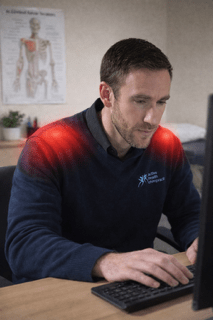
This is where subtle environmental adjustments make a noticeable difference.
WORKSTATION SETUP—THE HIDDEN COSTS OF SITTING POORLY
The aim is not to “fix” frozen shoulder with equipment.
The aim is to reduce repeated strain while the capsule recovers.
If you don’t do this, it’s like picking at a scab and wondering why the wound won’t heal.
Ergonomic Chairs (Arm Support Is Not Optional)
If you’re spending 6–8 hours a day at a desk, your chair becomes part of your treatment plan.
For frozen shoulder, the key features matter:
- Adjustable armrests
- Solid adjustable lumbar support
- Slight recline function (100–110°)
- Stable seat depth
- Comfortable padding you’ll actually tolerate long term
Without proper arm support, your shoulder muscles remain subtly active all day, just holding your arm up. That low-level load can significantly increase end-of-day stiffness and discomfort.
Kitchen table setups might save money upfront — but they often cost you in flare-ups.
This is the chair I recommend to my patients because it ticks all the above boxes, is well built, and holds up over time. LINK PLUS PICTURE of chair
If you work full time at a desk, this isn’t a minor detail—it’s daily load management.
Are you still feeding the flare-up?
During the freezing phase, prolonged fixed posture often increases discomfort.
A rotating laptop desk gives you a different option that allows you to work comfortably LYING DOWN. This does three things:
- Reduces gravitational load on the shoulder
- Minimizes repetitive reaching and forward posture
- Allows you to work in a ‘calm’ position during painful periods
Are you modifying load during sensitive phases?
If not, you may be undoing recovery for 6-8 hours per day.
The adjustable laptop desk I recommend to patients is listed on my Product Page HERE

Variation protects the joint during sensitive phases.
FROZEN SHOULDER TREATMENT AND EXERCISE PRINCIPLES
Effective frozen shoulder treatment focuses on:
- Gentle mobility within tolerance
- Avoiding aggressive end-range stretching early
- Gradual strengthening during thawing
With frozen shoulder, the instinct is to protect it—hold it still, avoid using it, brace against impact.
But prolonged guarding can also reinforce stiffness. The shoulder capsule is already tightening. When movement drops further, two things happen:
- The joint loses even more mobility
- The surrounding muscles become weaker and more protective
Gentle regular movement helps:
- Maintain circulation
- Reduce excessive muscle guarding
…and
- Reminds the nervous system that the shoulder is still required to be of service.
STEP ONE is to start with these mobilisation exercises LINK.
Then progress on to these muscle activation exercises LINK.
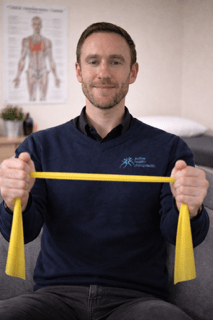
Remember, doing just a little every day will give you the best chance of a quicker recovery. Make sure you follow my exercises “Do’s and Don’ts” carefully.
WHEN TO SEEK FURTHER HELP

Seek assessment if you experience:
- Sudden trauma
- Marked weakness
- Severe, unrelenting pain
- Rapid progression with systemic symptoms such as fatigue and unexplained weight loss
- Uncertainty about diagnosis
Accurate diagnosis ensures appropriate management.
FREQUENTLY ASKED QUESTIONS
How long does frozen shoulder last?
Most cases take 12–24 months to fully resolve, though steady improvement is typical.
Can frozen shoulder heal without treatment?
Yes, but structured management improves comfort and function during recovery.
Is surgery required?
Rarely. Most cases are managed conservatively.
Should I stretch through the stiffness?
Gentle mobility is helpful. Aggressive stretching in early stages often aggravates symptoms.
FINAL THOUGHTS
Frozen shoulder is restrictive — but predictable.
It is not usually caused by posture.
It is not primarily a tendon issue.
It is a capsular restriction that improves over time. The most important things are to:
- Reduce repeated strain.
- Match exercise effort to phase.
- Stay consistent.
That supports recovery.
DISCLAIMER
This content is for educational purposes only and does not replace individual medical assessment.
If symptoms worsen, do not improve appropriately, or feel unusual, seek professional evaluation.
Always consult a qualified healthcare provider before beginning rehabilitation programmes.
Please note, I may earn a small commission for any products bought through my affiliate links. I never recommend anything that I wouldn’t recommend to patients or use myself
 Active Health Hub